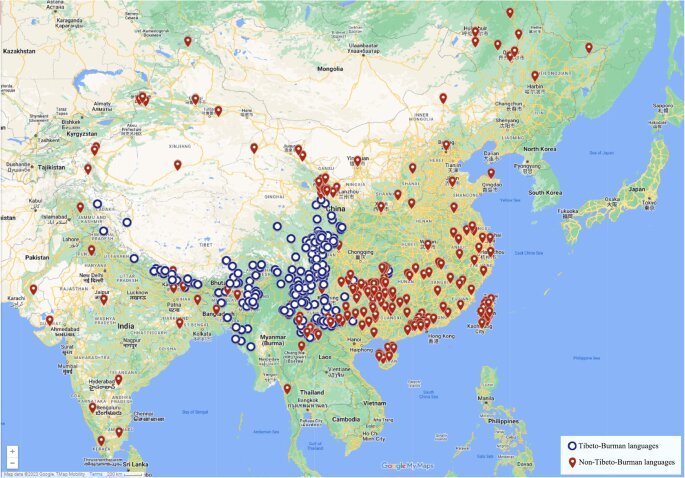
The Himalayan and Northeastern Frontier
Capping the northern and northeastern borders of India is the Sino-Tibetan language family, primarily represented by its Tibeto-Burman sub-branch. Though spoken by less than 1% of the Indian population, this linguistic family is breathtakingly diverse, boasting over 220 recognized language labels. The Tibeto-Burman languages span from the high altitudes of Ladakh in the west, through Himachal Pradesh and Sikkim, all the way to the lush, hilly states of India's Northeast.
What Makes These Languages Unique
Many of these languages are tonal, setting them apart structurally from the Indo-Aryan and Dravidian languages. This means the pitch of a word can entirely change its meaning -- a feature shared with Mandarin, Thai, and Vietnamese, but absent in most other Indian tongues.
In Nagaland alone, over a dozen mutually unintelligible languages are spoken across neighboring valleys -- a staggering density of linguistic diversity in a tiny geographic space.
Key Languages to Know
- Bodo and Manipuri (Meitei): Both boast deep literary traditions and are officially recognized in the Constitution's 8th Schedule. Manipuri has its own ancient script, Meitei Mayek.
- Himalayan Tongues: Including Lepcha, Sikkimese, and Kinnauri, which share cultural overlaps with broader Tibetan traditions.
- Naga and Kuki-Chin: Encompassing dozens of distinct, mutually unintelligible languages spoken across Nagaland, Mizoram, and surrounding areas.
These languages are the lifeblood of India's northeastern frontier. They preserve unique indigenous histories, rich folklore, and vibrant cultural identities that are found nowhere else on earth -- adding the final, brilliant threads to India's extraordinary linguistic tapestry.

Comments
Be the first to share your thoughts!