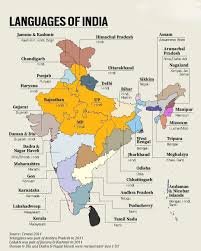
India is not merely a geographic entity; it is a sprawling, vibrant linguistic universe. Despite housing approximately 16% of the global population on just 2.4% of the world's land surface, communication in the Indian subcontinent has flowed seamlessly for millennia.
The Dawn of Oral Traditions and the Sacred Word
The earliest reflections of Indian speech are preserved in sacred texts like the Rig-Veda, the Brahmanas, and the Upanishads. Dating back to roughly 2000 B.C., these treatises were composed in Vedic Sanskrit. Long before the invention of written scripts, ancient Indians developed rigorous mnemonic techniques -- Shruti (that which is heard) and Smriti (that which is remembered) -- to orally transmit thousands of hymns across generations without altering a single syllable or pitch.
The word Veda itself derives from the Sanskrit root vid -- to know -- representing a primal, civilization-wide quest for knowledge.
From Sacred Hymns to Secular World Literature
Early Indian creative writers and critical thinkers interacted closely, birthing a rich interpretive tradition. They laid the groundwork for complex literary theories, such as the Rasa theory (aesthetic flavor), identifying distinct human sentiments that would eventually influence world literature. From the sprawling epics of the Mahabharata and Ramayana to classical Sanskrit dramas by Kalidasa, India's literary output set global benchmarks.
A Geopolitical Identity Built on Ideas
Today, the South Asian subcontinent exists as a modern geopolitical identity, formalized after independence in 1947. Yet, historically, India has always been a concept -- a shared mental and cultural map bound together by an unshakeable linguistic and philosophical foundation. This unique "linguistic area," a term coined by linguist Murray B. Emeneau, shows that despite different language families, centuries of coexistence have created a unified cultural and linguistic ethos across the subcontinent.


Comments
Be the first to share your thoughts!