
We are living in an era defined by a search for authenticity. Indian travelers, in particular, are showing a profound exhaust with the manufactured, generic luxury of resorts. We have stayed in the perfect, climate-controlled rooms. We have eaten the buffet.
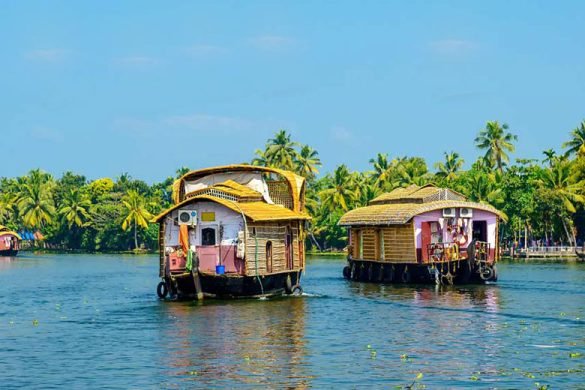
By 2026, the defining "Culture" and "Stories" trend is the search for a raw, deep, and vulnerable connection with India's ancient heritage. We want to understand how a specific community in the Kerala backwaters has fished for 500 years. We want to know why a village in Rajasthan uses specific colors in their traditional embroidery.
This desire has fueled an explosive growth in the "Homestay" vertical. But for decades, this sector was plagued by a singular, paralyzing fear: the Trust Barrier. How do I know that a homestay advertised in a remote Kerala village is safe? How do I know the photos are real?
The Verification Revolution (The 2026 Model)
In 2026, technology isn't adding slick filters; it's adding verified transparency. The shift from "Aggregation" (finding any homestay) to "Verification" (finding a trusted one) is complete.
The leading homestay platforms of 2026 have massive, AI-powered verification engines. Before a listing goes live, the platform sends a human specialist and a 3D-mapping drone to create a millimeter-accurate digital twin of the property.
When you "look at the photos" of a homestay in the Keralan backwaters, you aren't looking at optimized still shots. You are walking through the digital twin, verifying the soundproofing of the windows, the quality of the bedding, and the real view from the terrace.
What 'Verified' Actually Means in 2026
- 3D walkthrough of every room (no more "deceptive angle" surprises)
- Verified host identity via Aadhaar + government registration
- Real-time noise level data from on-site IoT sensors (matters for light sleepers)
- Verified safety equipment — smoke detectors, fire extinguishers, first-aid
- Real photos with timestamps — taken within the last 90 days, geo-tagged, EXIF-verified
- Direct connection to local police helpline for emergencies
Decentralised Trust and Peer-to-Peer Storytelling
The final, powerful technological shift is the use of decentralised trust models (like blockchain). Reviews in 2026 cannot be "gamed." The platform creates a tamper-proof record of the user's verified activity.
If a review says, "This homestay in Alleppey serves the most authentic Karimeen Pollichathu," you can click on the reviewer's profile. You aren't just seeing their "score." You are seeing a verifiable history of their past culinary exploration in the region.
The AI cross-references this and says, "This reviewer is in the top 1% of users with a validated history of exploring historical South Indian cuisine."
The review moves from "subjective opinion" to "validated, expert-level cultural context."
The Best Verified Homestay Platforms in 2026
| Platform | Specialty | Strength |
|---|---|---|
| StayVista | Premium private villas + heritage homes | Strongest curation in Rajasthan, Goa, Kerala |
| Tripoto Homestays | Boutique village stays | Real reviewer profiles, deep Northeast coverage |
| Airbnb (Verified by Airbnb) | Wide range | The "Verified" badge now requires the 3D scan |
| HomeStay India (govt) | State-approved homestays | Cheapest, slowest, but most trusted for remote regions |
The Result: Travel, Humanized
This technology does something profound. It uses data, verification, and decentralised trust to solve a human problem. It removes the friction and anxiety from the transaction.
When the logistical and safety fears are managed, you are left with something beautiful: a space for a real, deep, human connection. Technology isn't making travel colder; it is providing the safety net that allows us to experience the raw, profound warmth of India's ancient cultures.

Comments
Be the first to share your thoughts!